

Computing
Intent and Implementation
At Highfields Primary Academy, we want pupils to be masters of technology rather than slaves to it. Technology is all around us and will play an important part of the lives of our pupils, both now and in the future. Therefore, we want to model and educate our pupils of how to use technology positively, responsibly, safely and independently. We want to encourage pupils to be creators rather than consumers and our curriculum (encompassing computer science, information technology and digital literacy) reflects this.
We recognise the best prevention for many issues linked to technology/social media is through education. We want pupils to understand there is always a choice when using technology and we will utilise technology (especially social media) to model these positive uses.
We recognise that technology can allow pupils to share, collaborate and communicate in a variety of ways. Our knowledge based curriculum has to be balanced with opportunities for our pupils to creatively apply their knowledge; this in turn helps pupils become computer scientists. We want our pupils to become fluent with a range of tools and hope that by the end of Key Stage 2, they will have the confidence to choose the best tools to become problem solvers and fulfil the task/challenge set by staff.
IMPLEMENTATION
Our Computing curriculum is based around these threshold concepts for children at Highfields to:
- be digitally literate
- be a responsible digital citizen
- be computational thinkers
- analyse problems
- understand how systems work
- critically analyse and evaluate technologies
- use technology, programs creatively
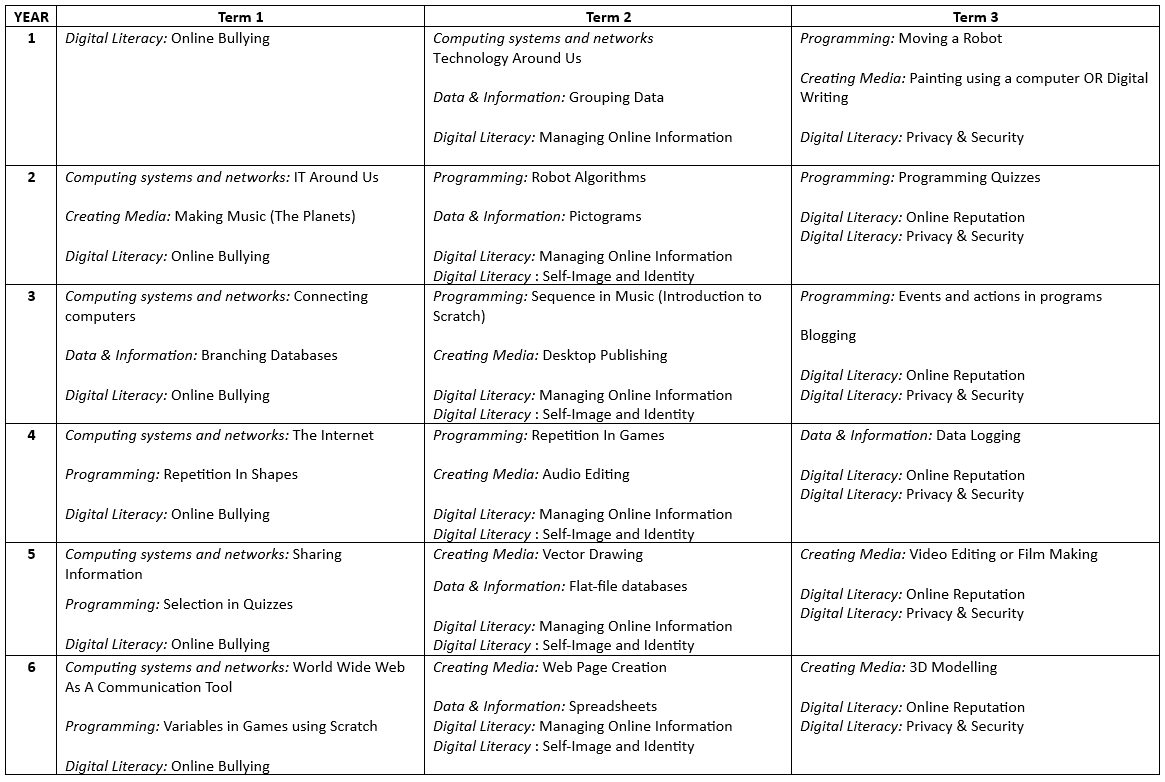
The curriculum is continuously reviewed by the Subject Leader alongside the staff who feedback. We encourage staff to try and embed computing across the whole curriculum and their expectations of the pupils are driven by the comprehensive subject progression grid that has been written with the three core areas of Computing in mind. The knowledge and skills build year on year to deepen thinking and challenge our pupils.
- Computer Science – the understanding of coding and programming across a range of physical devices and digital resources.
- Information Technology – the range of skills required to operate and manipulate specific programs, systems, and content.
- Digital Literacy – the knowledge required to use technology safely and to evaluate and react to any potential risks of the online/digital world.
The National Curriculum provides the basis for the progression grids and this content is then supplemented by additional resource banks, such as: NCCE, Scratch and Barefoot. We also participate in ‘Internet Safety Week’ in which each class is provided with age appropriate texts and tasks. Cross-curricular opportunities are identified where appropriate to ensure that computing is not just seen as a standalone area.
Computing in the Early Years
We recognise that technology is important for our children to have experience of as they live in an ever-digitalised world. In EYFS, children will have opportunities to take photographs with a camera or tablet, play games on the interactive whiteboard, watch video clips, listen to music, explore mechanical toys, use a Beebot or search for information on the internet.
Computing Whole School Curriculum Map